Nissan: where most drift careers start (and most wallets end)
Nissan didn't set out to build drift cars. They built cheap, light, rear-wheel-drive coupes with turbocharged four-cylinders and inline sixes — and the drift community did the rest. The S-chassis is where most people start, the Skyline is where the budget disappears, and somewhere in between sits a decade of aftermarket support so deep you can build an entire car from a catalog. From D1 Grand Prix paddocks in Japan to Formula Drift grids in America, Nissan chassis show up more than any other make. That's not marketing. That's just what happens when a manufacturer accidentally makes the perfect platform and then does it again three more times.
The S-chassis dynasty
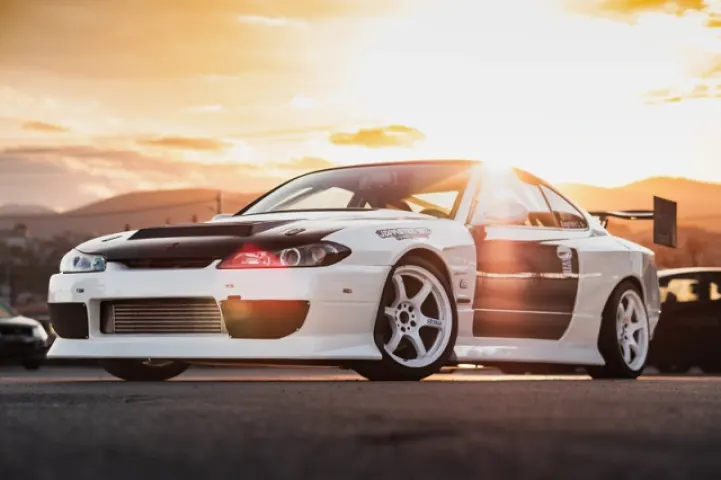
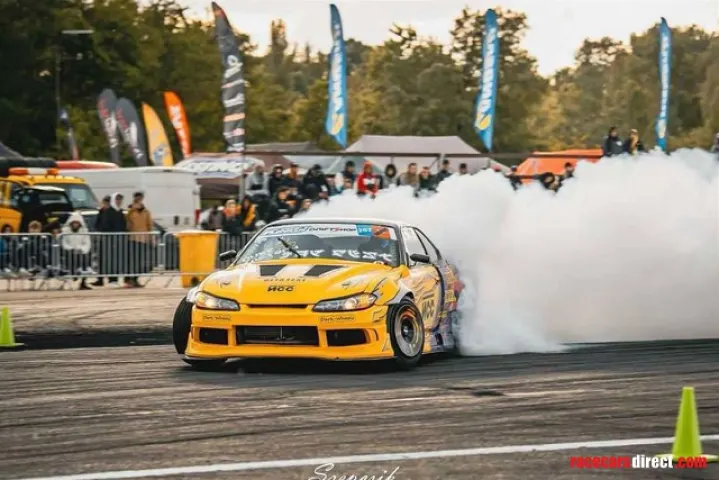
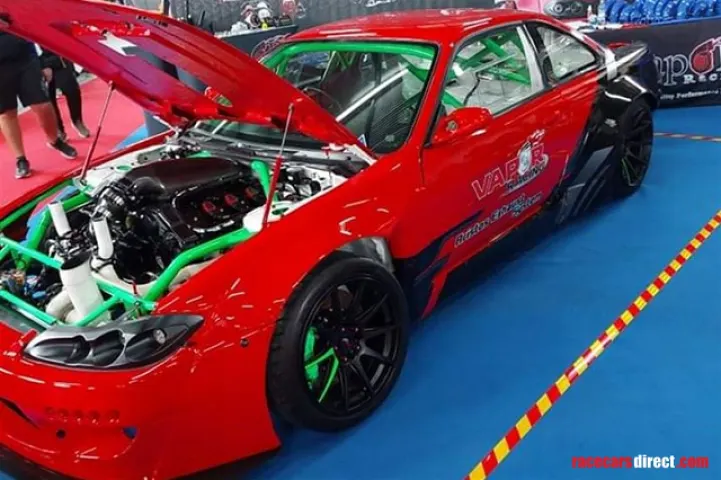
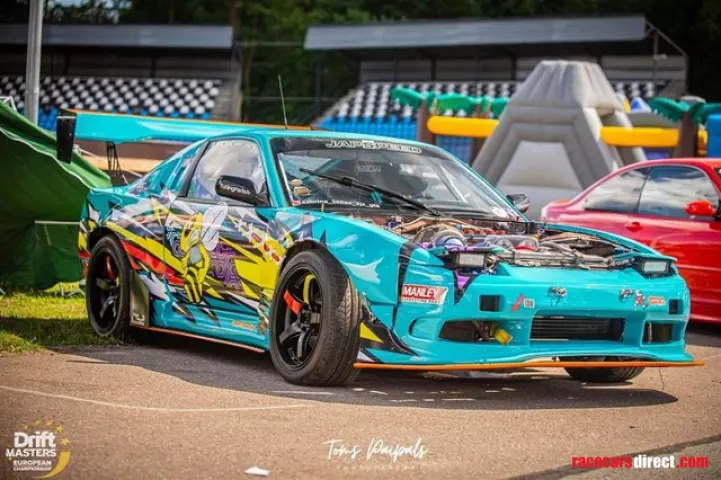
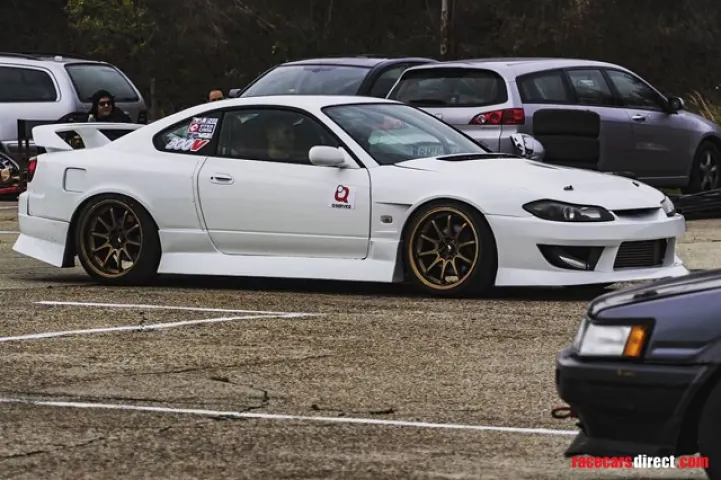
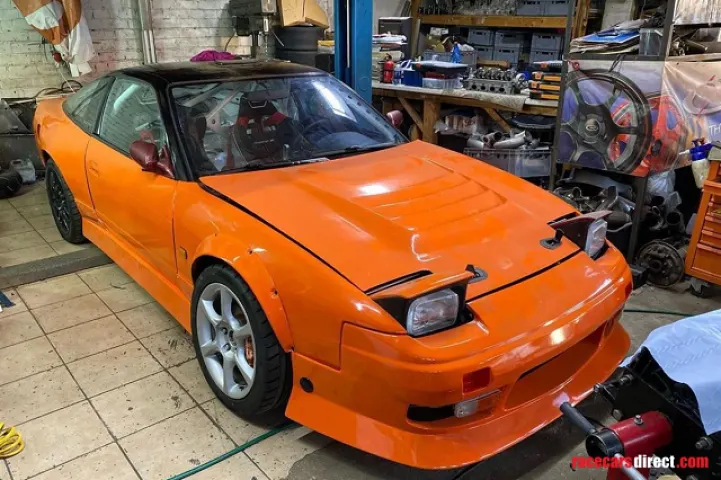
The S13, S14, and S15 are the backbone of drifting worldwide, and it's not complicated why. Light chassis, front-engine rear-drive layout, and the SR20DET — a 2.0-liter turbocharged four-cylinder that refuses to die and responds to boost like it was designed for exactly this (it wasn't, but let's not ruin the magic). The S13 240SX showed up in the late 1980s with pop-up headlights and a balance that made overcooking a corner feel like a feature, not a mistake. The S14 stiffened the chassis and widened the stance. Then came the S15 Silvia — never officially sold in North America, which only made people want it more. The Spec-R came from the factory with 250hp, a six-speed gearbox, and a limited-slip diff. Most drift cars need thousands in modifications to get what the S15 had on the showroom floor. The 180SX shared the S13 platform but wore fastback bodywork, giving you the same mechanical package with different looks. Pick your style; the parts bin is the same.
Skyline and RB power
The Skyline GT-R was built for grip racing with all-wheel drive, which sounds like the opposite of a drift car. But strip the front driveshaft out of an R32, R33, or R34, and you've got a rear-drive chassis with one of the best engine families ever bolted into a production car. The RB20DET and RB25DET are solid starting points. The RB26DETT is the one people lose sleep over — a twin-turbo inline-six that sounds like tearing fabric at high RPM and makes power that climbs as fast as you're willing to spend. Daigo Saito and Mad Mike Whiddett have both run Skyline-based drift builds at the top level, proving the platform works when the driving matches the hardware. These engines also swap into S-chassis cars without much drama, which means an RB-powered S13 is less a fantasy build and more a weekend project (a long weekend, but still).
Why Nissan owns grassroots drifting
Timing mattered. When drifting blew up in the 1990s, S-chassis cars were depreciating fast — cheap used coupes with rear-wheel drive, manual transmissions, and parts at every junkyard. You could buy one, weld the diff, bolt on coilovers, and be sideways by the weekend. The SR20DET goes from a stock 200hp to 500hp+ on a built bottom end, and the RB series scales even further with that inline-six torque that shreds rear tires without trying. The aftermarket grew up around these cars. Angle kits, turbo upgrades, standalone ECUs, body kits — the catalog is enormous because the demand never stopped. Prices have climbed hard since those junkyard days, especially for clean S15s and R34s, but a rough S13 or S14 is still one of the most accessible ways into the sport. Nissan didn't plan any of this. They just built the right car at the right time, and drifters figured out the rest.