What Is Drifting — and What It Definitely Is Not
"Drifter terrorizes neighborhood." "Caught on camera: drifting at intersection." "Maniac drifts through shopping mall parking lot."
Open any news site and half the headlines are screaming about drifting. The problem? Most of what they're showing has nothing to do with drifting. Donuts in the snow, handbrake turns in a wet parking lot at 3 AM, burnouts on a roundabout. None of that is drifting. And calling it drifting hurts the people who do this sport for real.
So what is drifting? Time to clear things up.
What drifting is NOT
Before we get into what drifting is, let's deal with what it isn't. Because this is where the confusion starts.
Donuts are not drifting. Spinning in circles in one spot, on snow, ice, or dry asphalt, is not drifting. Drifting requires driving along a designated line in a controlled slide. Spinning around your own axis is not a discipline. It's just spinning.
Burnouts are not drifting. Standing still and shredding your rear tires until there's smoke? That's a burnout. It doesn't require slide control or any ability to manage the car's trajectory. Looks good on a phone video, but it has about as much in common with drifting as kicking a ball around has with football.
Handbrake turns in a parking lot are not drifting. Pulling the handbrake in a FWD Golf and swinging the rear end around on a wet supermarket parking lot is not drifting1. Drifting by definition requires a rear-wheel-drive car and maintaining a controlled slide through an entire corner. Mateusz Podyma, an expert from driftomania.pl, says it plainly: handbrake turns are a completely different category of maneuver2.
And if someone says "but the cops wrote 'drifting' on the ticket," well, yeah. Most traffic laws don't define drifting as a motorsport. Poland's Article 86c of the Code of Misdemeanors, for example, penalizes "intentionally causing a vehicle to slide"3. Broad. Very broad. Broad enough to cover things that have nothing to do with actual drifting.
What is drifting — the real definition
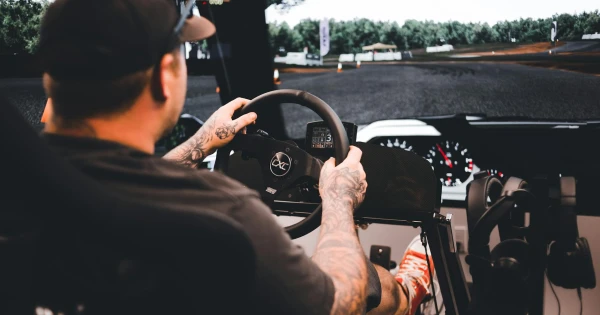
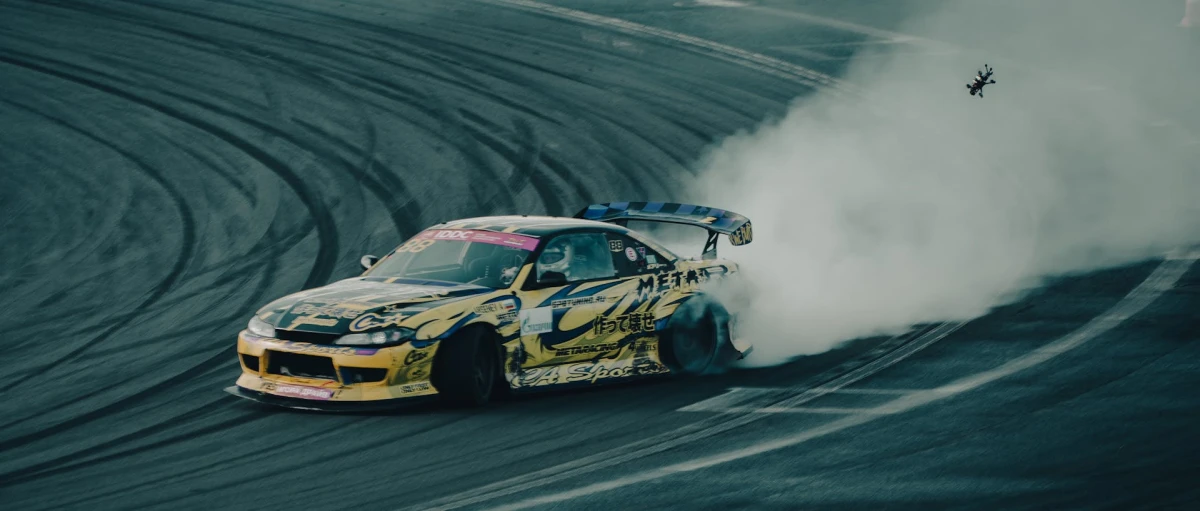
Drifting is the controlled driving of a rear-wheel-drive car in a sustained oversteer slide. The driver intentionally puts the car into oversteer and maintains it by coordinating four inputs (often three at once): throttle, steering, brake, and clutch. Slide angles reach 45 to 60 degrees at speeds of 60 to 90 mph. The whole time, the driver knows exactly where the car is and where it'll be a second from now.
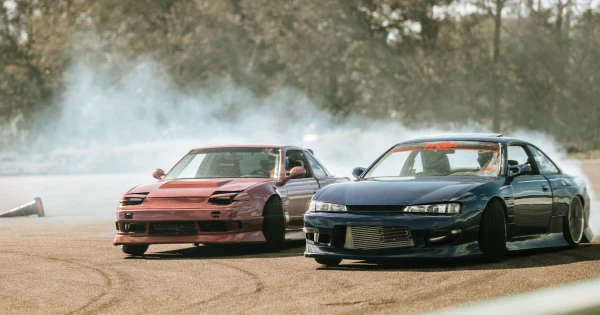
It's not a race. You don't win drifting by being the fastest. Judges score angle, line (whether the car hits designated clipping points on track), speed, and style. In competition brackets (TOP 32, TOP 16, TOP 8), two drivers go head to head in tandem. The lead car sets the pace and line, the chase car has to follow as close as possible and mirror the run. Then they swap. The more precise driver wins, not the faster one.
As a competitive discipline, drifting was born in Japan in the 1970s on mountain roads. Kunimitsu Takahashi, the first Japanese rider to win a motorcycle Grand Prix, switched to four wheels and started taking corners sideways. Keiichi Tsuchiya picked up the technique and turned it into an art form. Today, drifting has professional series around the world: Drift Masters Grand Prix in Europe, Formula Drift in the US and Japan, D1 Grand Prix.
This is a sport where millimeters matter. One degree too much angle and the car spins out. Not enough throttle and the slide dies. You can't predict what the driver ahead of you will do, and then you're into them or into the wall. Every run is dozens of decisions made in seconds.
Drifting is an expensive sport
If someone thinks drifting is "stupid kids in a parking lot," they should look at the numbers.
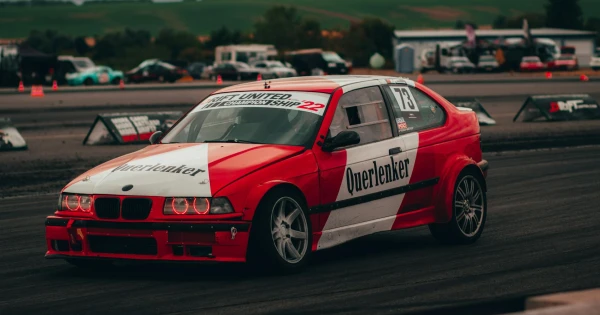
Building a drift car starts with the car itself. A BMW E36, the most popular platform in the European drift scene, costs $3,000 to $5,000 in project condition. Then come the mods you can't skip: welded diff or LSD ($400–$800), coilovers ($500–$1,200), angle kit ($400–$800), hydraulic handbrake ($200–$400), bucket seats and harness ($250–$500). You're at $5,000–$8,000 minimum before the car sees a track4.
Then the running costs kick in. A set of rear tires lasts about 10 runs on track. On a single practice day, you'll go through 2 to 4 sets. That's $250–$500 per day just in rubber4. Add fuel (on track, a drift car burns 5 to 10 gallons per hour), entry fees ($75–$125 per session), towing, and the repairs you can't avoid.
Annual budget for an amateur? $2,500–$4,000, and that's without counting breakdowns4. If you compete, you're spending $25,000–$50,000 a year4.
Nobody spends that kind of money on "hooliganism." It's a serious investment in a sport that takes years of practice and thousands of miles of sideways driving before you start seeing results. Browse drift cars on DriftHub and you'll see how much people put into their builds.
Roll cage, helmet, and barriers — safety on track
Drifting on a proper track comes with real safety infrastructure. At sanctioned competitions, the car needs a full roll cage, bucket seats with multi-point harnesses, and a fire extinguisher. The driver wears a helmet, and at higher competition levels, a fire-resistant suit and gloves. All of this is recommended at regular weekend practice days too.
On the track itself: concrete and tire barriers, runoff zones, medical crew on standby, fire crew ready to roll. Every run is monitored. If something goes wrong, help is seconds away.
Compare that to a parking lot. No barriers. No medical crew. Light poles, curbs, parked cars. People who could walk around the corner at any moment. The difference between drifting on a track and what people do in parking lots is the same as the difference between boxing in a ring and a street fight.
Other motorsports have the same requirements and nobody demonizes them. Go-karts require helmets and suits. Rally requires a cage, harness, and helmet with a HANS device. Nobody says go-karts "promote illegal street racing" because that would be absurd. But drifting gets treated differently, because media can't tell the sport apart from the reckless driving.
Why media confuses drifting with hooliganism
The problem starts with the word. "Drifting" sounds dramatic in a headline. "Teenager pulled the handbrake in a parking lot" doesn't get clicks. "Drifting terror on residential street, shocking footage" gets clicks.
Media uses the word "drifting" for anything that goes sideways. A crash where a car lost traction? Drifting. Donuts in the snow? Drifting. A burnout on a roundabout? Drifting. This happens everywhere, from local TV stations to major news outlets.
And the law often doesn't help. Poland created a new offense in 2026 specifically called "drifting" (Article 86c), but the legal definition just says "intentionally causing a vehicle to slide"5. There's no distinction between someone doing a handbrake turn in a FWD hatchback and an actual drift car on a closed course. As one commentator put it: is a front-wheel-drive car doing donuts "drifting"? Is a BMW taking a roundabout slightly too fast "drifting"? The law doesn't differentiate6.
This hurts the community. People who invest tens of thousands of dollars, hundreds of hours on track, and years of skill development get lumped in with someone who yanked the handbrake in a parking lot. And then we wonder why it's hard to build infrastructure for legal drifting when the public thinks drifting equals danger.
Infrastructure over bans
Bans without alternatives don't work. This isn't theory. It's been tested around the world.
Japan built Ebisu Circuit, a complex of 7 tracks and 2 skid pads created by drifter Nobushige Kumakubo specifically as a legal alternative to mountain road drifting. At the same time, penalties for street drifting reach 500,000 JPY and 2 years in prison7. Tough punishment plus a real alternative.
Saudi Arabia had a massive problem with tafheet, street drifting that killed dozens of people every year. The answer wasn't just fines. They built Dirab Motorsports Park in Riyadh and the Mahara drifting school. Penalties for street drifters reach 20,000 SAR with 15-day vehicle impound8, but young people have somewhere to go.
USA: in Detroit, where police were impounding over 250 cars per year for illegal street racing, Milan Dragway is converting a parking lot into a drift pad. Police Commander Eric Decker says it straight: legal venues are the only way to redirect adrenaline off the streets9.
Every community that takes drifting seriously has figured out the same formula: build tracks, enforce street laws, give people a legal outlet. Bans alone just push the problem underground.
Street drifting — we don't support it
To be clear: DriftHub does not support drifting on streets, parking lots, or any public roads. It's dangerous, it's illegal, and it damages the entire community.
In Poland, where DriftHub is based, fines for drifting on public roads start at 1,500 PLN (~$375) and go up to 30,000 PLN (~$7,500) since March 2026. That comes with a 3-month license suspension and up to 22 penalty points for a single incident. The situation is similar in most countries: street drifting carries heavy penalties, and for good reason.
But banning alone isn't enough. Young people drawn to motorsport need legal places to go. A drift track, a practice day, a course with an instructor. Check the drift events calendar for options near you.
Drifting is a sport. Let's treat it like one. With tracks, rules, and respect, not headlines about "drifting terrorists."
Frequently Asked Questions
What is drifting?
Drifting is the controlled driving of a rear-wheel-drive car in a sustained oversteer slide. It's a judged motorsport scored on angle, line, and style. You don't win by being the fastest.
Is drifting illegal?
On a closed track or private property, no. On public roads, in residential areas, and in parking lots, yes, in most countries. Penalties vary but typically include fines and license suspensions.
Are donuts the same as drifting?
No. Donuts (spinning in circles) are not drifting. Drifting requires driving along a designated line in a controlled slide in a rear-wheel-drive car.
How much does drifting cost?
Building a drift car starts at $5,000–$8,000 minimum. Running costs include tires ($250–$500 per track day), entry fees ($75–$125), and fuel. An amateur season runs $2,500–$4,000 per year.
Is drifting dangerous?
On a track with proper safety equipment (roll cage, harness, helmet) and medical crew on standby, drifting is as safe as any other motorsport. Street drifting is dangerous, and we don't support it.
PrawoDrogowe.pl — "Don't confuse drifting with tire burning." Expert confirms drifting requires rear-wheel drive and speed-induced oversteer. ↩
Info-car.pl — Mateusz Podyma (driftomania.pl): "Handbrake turns are not drifting." Article featuring expert opinions. ↩
Article 86c of Poland's Code of Misdemeanors, effective January 29, 2026. Definition: "intentionally causing a vehicle to slide." ↩
111shop.pl — drift car build and season cost breakdown. USD figures converted from PLN at approximate rates. ↩ ↩ ↩ ↩
Article 86c of Poland's Code of Misdemeanors. Full legal text available via Polish government gazette (Dziennik Ustaw). ↩
Autoblog.SpidersWeb.pl — "Penalty points for drifting — the definition problem." Article about the absence of a legal definition for drifting in Polish law. ↩
Article 117, Japan Road Traffic Act. Ebisu Circuit data: 33rdsquare.com, Wikipedia. ↩
ArabNews, Wikipedia — tafheet penalties in Saudi Arabia and Dirab Motorsports Park construction. ↩
News4Jax — Milan Dragway conversion in Michigan, statement from Police Commander Eric Decker. ↩